
How to show your insight and competitive advantage in a pitch deck
Based on advice from Aaron Harris (Y Combinator), Sequoia Capital · Updated 2 October 2026
More from Y Combinator and Paul Graham, Sequoia Capital
Short answer
Tell the investor what makes you special, why this works and what you understand that others don't. It comes right after traction and can take more than one slide. Sequoia splits the same ground into two questions: why now, and how you beat the competition.
What to include
- What makes you special.
- What makes this work.
- Your insights: what you understand that others don't.
- It can take more than one slide, up to three.
Where it fits
The insight comes after traction and before the business model: proof first, then why it will keep working.
Sequoia's two questions
- Why now? Sequoia asks why your solution hasn't been built before now.
- Competition and alternatives: who your direct and indirect competitors are, and your plan to win.
In your deck
Read your insight slide and ask: could a competitor put the same words on theirs? If yes, it isn't an insight yet.
Real examples
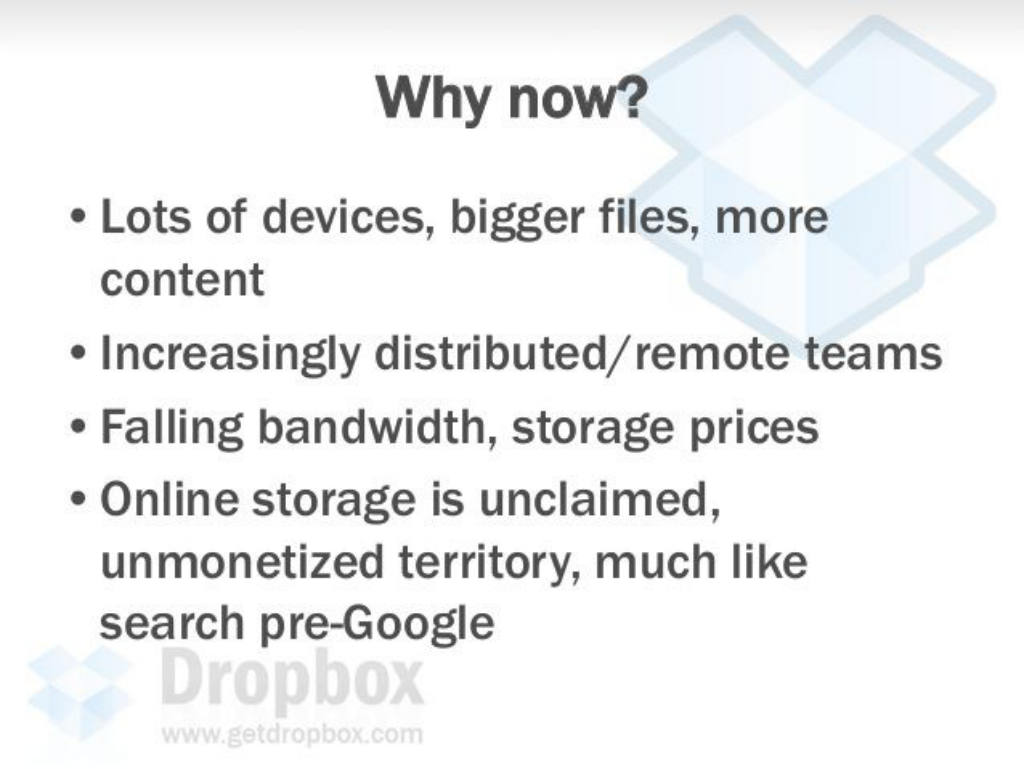
Dropbox (2007) · slide 8
Dropbox's why-now slide: more devices and bigger files, more remote teams, and falling bandwidth and storage prices.
See the whole Dropbox deck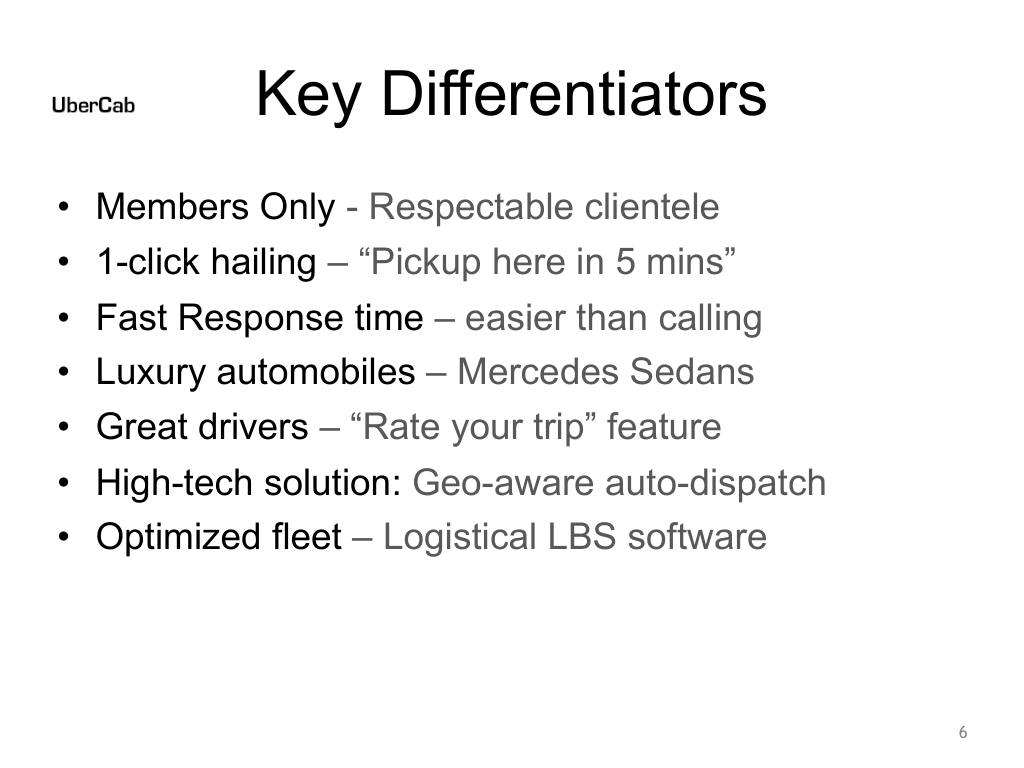
Uber (2008) · slide 6
Uber listed what made it different from a taxi: one-click hailing, fast response, driver ratings and auto-dispatch.
See the whole Uber deck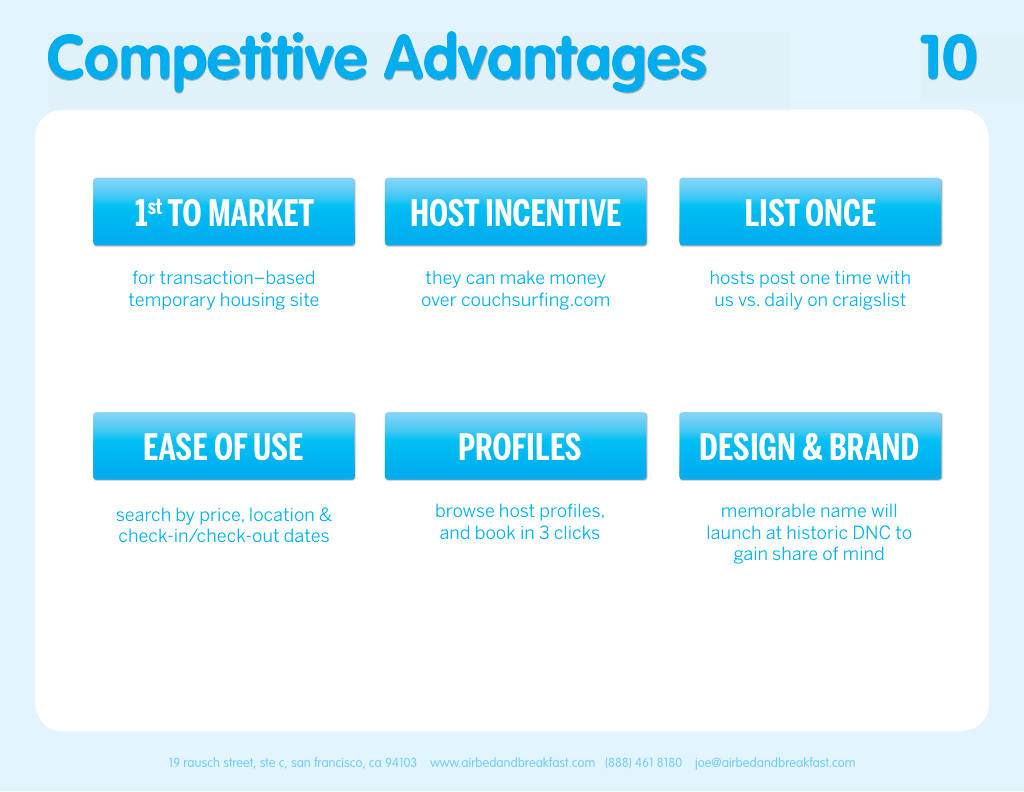
Airbnb (2008) · slide 10
Airbnb named six advantages, from first to market to host incentives and design.
See the whole Airbnb deck
Read the originals
- How to build your seed round pitch deck · Aaron Harris (Y Combinator)
YC's seed deck template, with what goes on each slide.
- Writing a business plan · Sequoia Capital
Sequoia's outline, including why now and competition.
Questions founders ask
- What is the insight slide in a pitch deck?
- The slide that explains what makes you special and why this works. It comes after traction.
- Do I need a competition slide?
- Sequoia's outline has one. You can also fold it into the insight: what makes you special compared to everyone else.
- What is a why now slide?
- A slide that explains what changed to make this possible today. It's part of Sequoia's business plan outline, and Dropbox's 2007 deck has a good example.
Get your deck reviewed the same way.
Comments on every slide, the words to change highlighted, and the 3 fixes that matter.
Keep reading
- What is an unfair advantage? The five kinds investors look for
Kevin Hale's five unfair advantages from YC Startup School: founder, market, product, acquisition and monopoly. How to show yours in your pitch deck.
- Why now? How to answer it in your pitch deck
Sequoia's why now question: why hasn't this been built before? How to answer it with what changed, and how Dropbox and YouTube did.
- Non-consensus and right: why the best startups look wrong at first
Andy Rachleff on why outstanding returns need ideas that are right and non-consensus, and Howard Marks on why they feel lonely at first.
- What is the idea maze? How to show investors you know your market
Balaji Srinivasan's idea maze: why a good idea is a path through your market's history and competitors, and how to show it in your pitch deck.