
What is the idea maze? How to show investors you know your market
An idea from Balaji Srinivasan · Updated 2 October 2026
Short answer
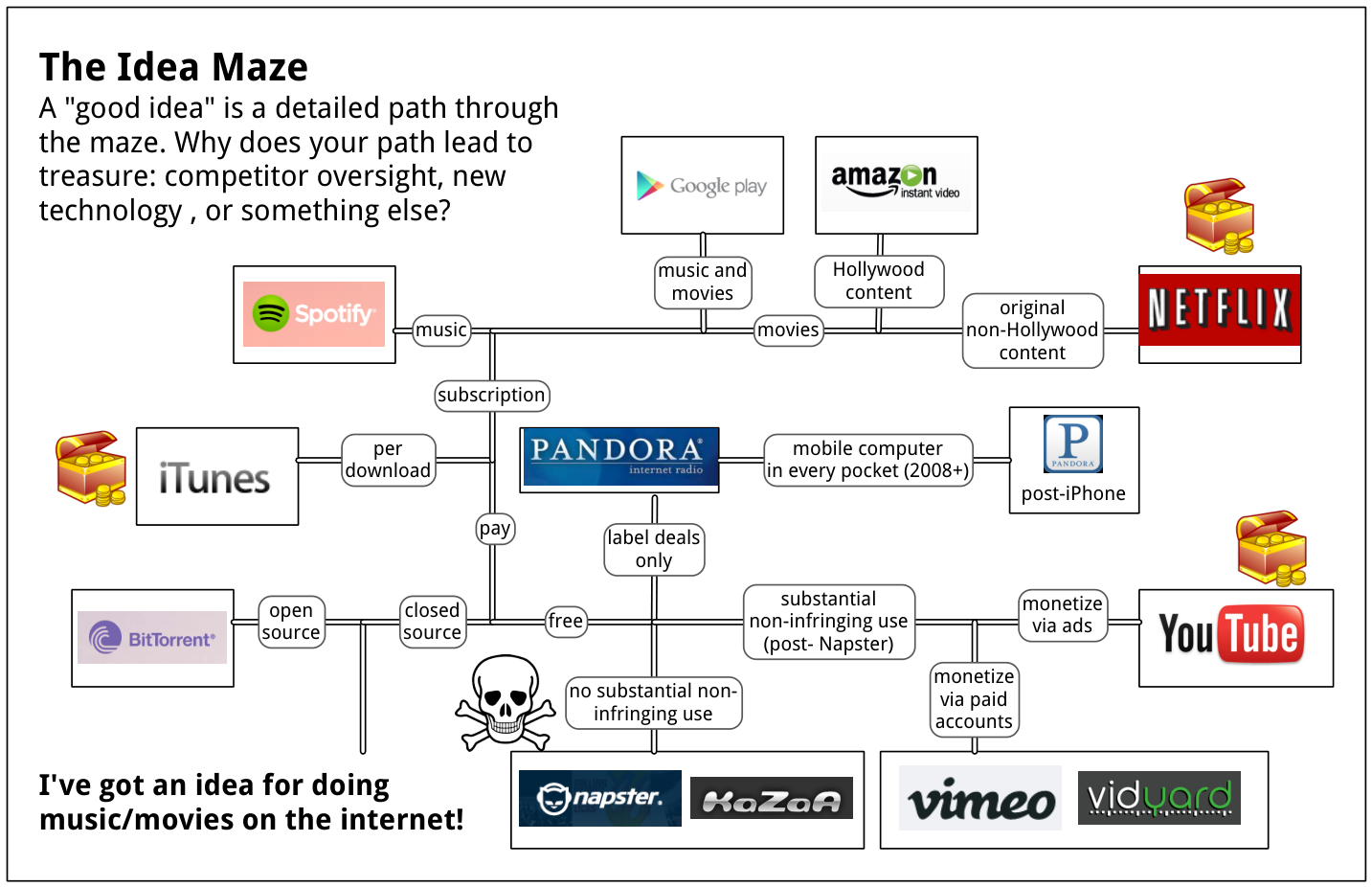
The idea maze is Balaji Srinivasan's way of describing a good startup idea: not the one sentence that gets you into a market, but a detailed path through it. A good founder knows the paths others took, the companies that died, and why their own path leads somewhere, whether through a competitor's oversight, a new technology or something else.
How the maze works
- Users only see the path one company took. They don't see the paths not taken, or the companies that fell into pits along the way.
- Some pits can't be crossed at all. Napster and Kazaa went down the free, file-sharing path that the courts closed.
- Walls move when new technology arrives. A mobile computer in every pocket opened a new door for Pandora.
- Some pits are crossable for one company and not another. Webvan failed where Amazon, Walmart and Safeway had the distribution to succeed.
- Some doors only open after you've won elsewhere, like Google going after email once search made money.
How to use it
In his words: "Anyone can point out the entrance to the maze." Few can explain why their path through it works.
- Map your market's maze: the companies before you, the ones that died and why, and today's competitors.
- Show why your path leads to treasure: a competitor's oversight, a new technology, or something else.
- If you think you have no competitors, keep looking until you find the most obvious adjacent market.
- Balaji notes that good ideas often need an obscure acronym or rule to explain, like KYC for PayPal.
In your deck
Your insight slide is where the maze shows up: why now, why past attempts failed, and why your path works. If it could fit any company in your space, it isn't there yet.
Real examples

Dropbox (2007) · slide 8
Dropbox's why-now slide reads like a door opening in the maze: more devices, bigger files, more remote teams, and falling bandwidth and storage prices.
See the whole Dropbox deck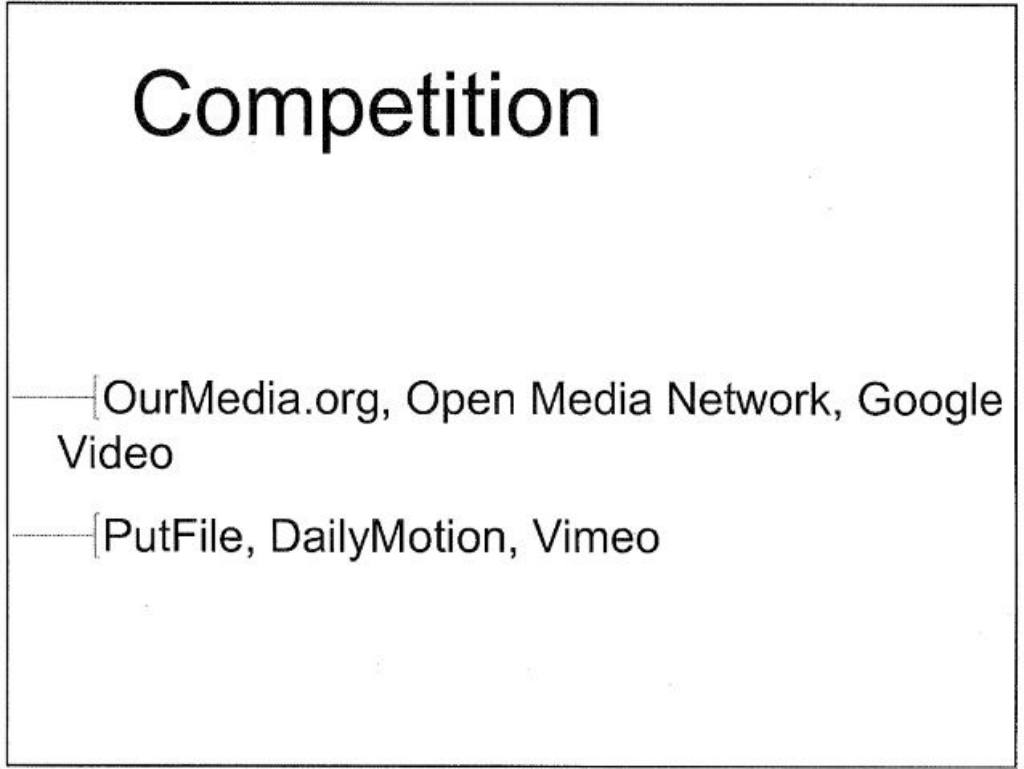
YouTube (2005) · slide 6
YouTube named the competitors it was racing in 2005, the same maze Balaji later drew, with YouTube's ad-supported path leading to treasure.
See the whole YouTube deck
Read the originals
- Market research, wireframing and design (lecture 5) · Balaji Srinivasan (Stanford Startup Engineering)
The original idea maze, with the diagram and how to use it for your market.
- Writing a business plan · Sequoia Capital
Sequoia's outline, including why now and competition.
Questions founders ask
- What is the idea maze?
- Balaji Srinivasan's idea that a good startup idea is a detailed path through a market, informed by its history, its failed companies and its current competitors, not just a one-line pitch.
- How do I show the idea maze in a pitch deck?
- On your insight or why-now slide: show the paths others took, why they failed, and what lets your path work, such as a new technology or something competitors overlooked.
- Who created the idea maze?
- Balaji Srinivasan, in his 2013 Startup Engineering lectures at Stanford.
Get your deck reviewed the same way.
Comments on every slide, the words to change highlighted, and the 3 fixes that matter.
Keep reading
- Why now? How to answer it in your pitch deck
Sequoia's why now question: why hasn't this been built before? How to answer it with what changed, and how Dropbox and YouTube did.
- Non-consensus and right: why the best startups look wrong at first
Andy Rachleff on why outstanding returns need ideas that are right and non-consensus, and Howard Marks on why they feel lonely at first.
- How to show your insight and competitive advantage in a pitch deck
How to show what makes you special and why this works, with Dropbox's why-now slide and Uber's and Airbnb's advantages.
- How to show market size in your pitch deck
What the market slide must prove, why TAM, SAM and SOM say little on their own, and Gurley on not capping your market at today's size.