Moz pitch deck (2011)
Moz's 2011 pitch deck is the 36-slide deck Rand Fishkin used in July 2011 to pitch SEOmoz, as Moz was then called, for a $20M to $25M round. That round fell apart in due diligence, and Moz raised an $18M Series B from Foundry Group in May 2012. Founders study the Moz pitch deck because Fishkin published it with the full story, and because it lays out a profitable company's real numbers in unusual detail.
- Company
- Moz
- Year
- 2011
- Round
- Series B
- Slides
- 36
ⓘ This deck was pitched in 2011 for a $24M round that fell apart during due diligence. Moz raised an $18M Series B from Foundry Group in May 2012.
Deck © Moz. Shared for learning, credited to slideshare.net.
What's in the Moz pitch deck
All 36 slides, in order.

Slide 1 · Cover
The Next Stage of Moz, how a tiny mom and son consultancy became the world leader in SEO software, and a roadmap to being Seattle's next $1 billion company. Rand Fishkin, July 2011.
How to write this slide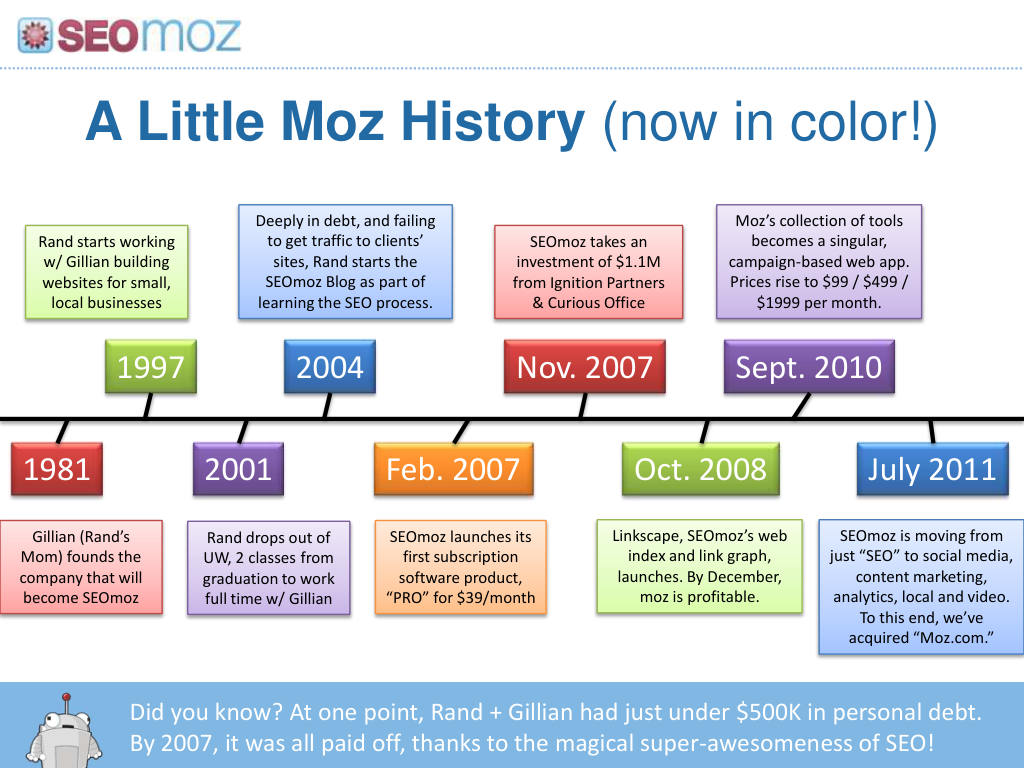
Slide 2 · A Little Moz History
A timeline from Rand's mother Gillian founding the company in 1981 to the $39-a-month PRO product in 2007, a $1.1M investment that November and profitability by December 2008, with a note that Rand and Gillian once had nearly $500K in personal debt.
Slide 3 · Revenue and traffic
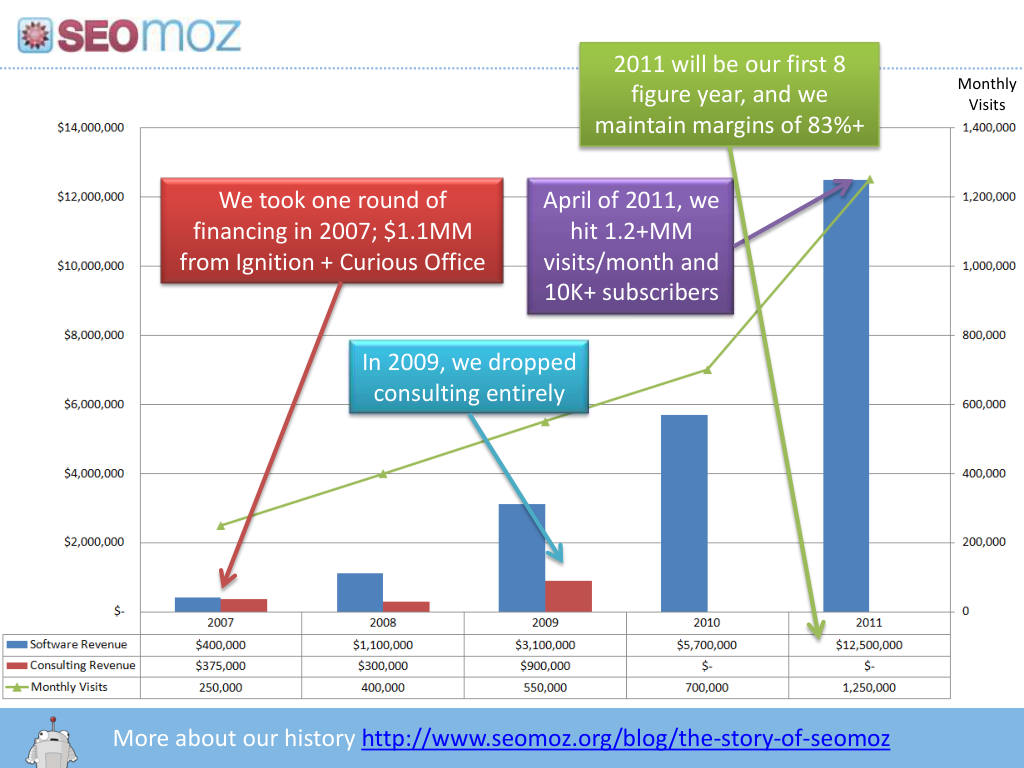
Software revenue from $400K in 2007 to a projected $12.5M in 2011, consulting dropped in 2009, 1.2M+ monthly visits and 10K+ subscribers by April 2011, and margins of 83%+.

Slide 4 · How'd We Do That?
A section divider.
Slide 5 · Inbound marketing
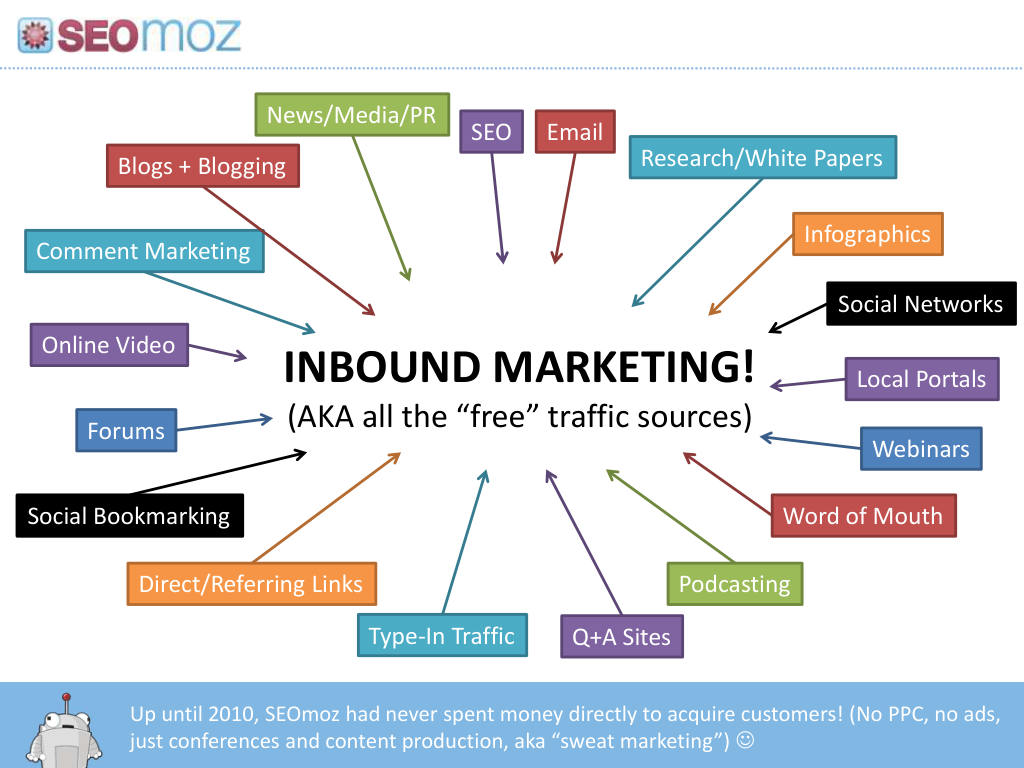
A web of free traffic sources, from blogging and SEO to webinars and word of mouth, and the note that until 2010 SEOmoz had never paid to acquire a customer.
How to write this slide
Slide 6 · What Moz sells
That's what we want to help other companies measure and improve through our cloud-based software.

Slide 7 · Macroeconomic Trends
A section divider, macroeconomic trends that benefit Moz.
Slide 8 · Marketing Spend Is Unbalanced
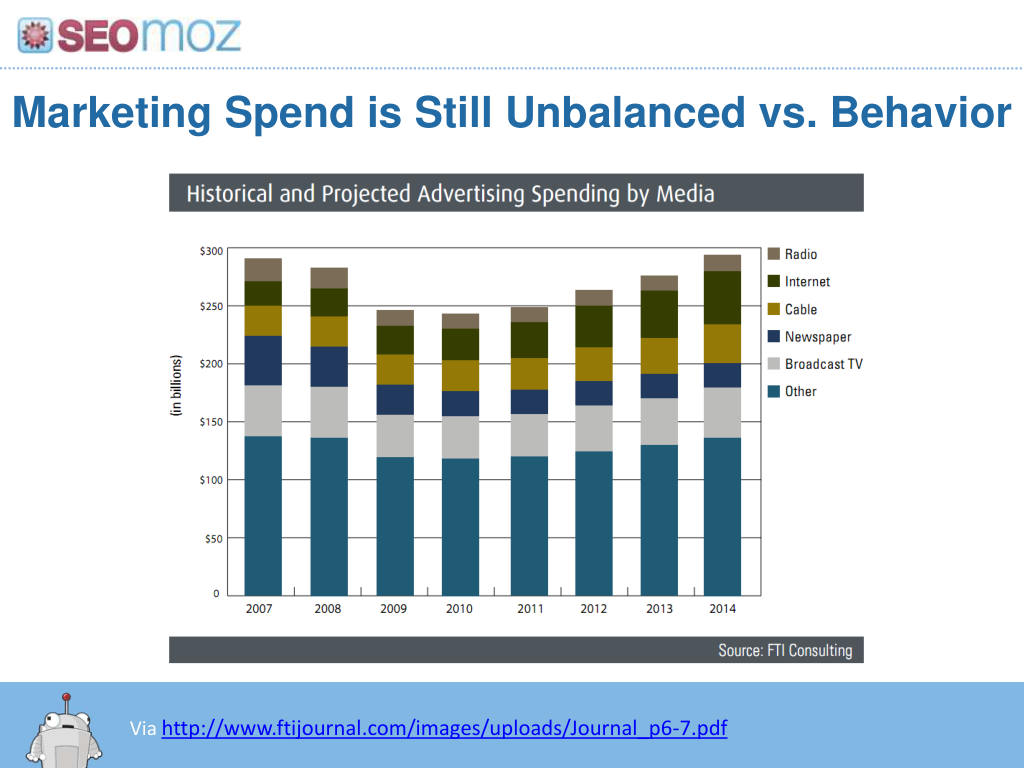
An FTI Consulting chart of US advertising spend by media from 2007 to 2014.
How to write this slide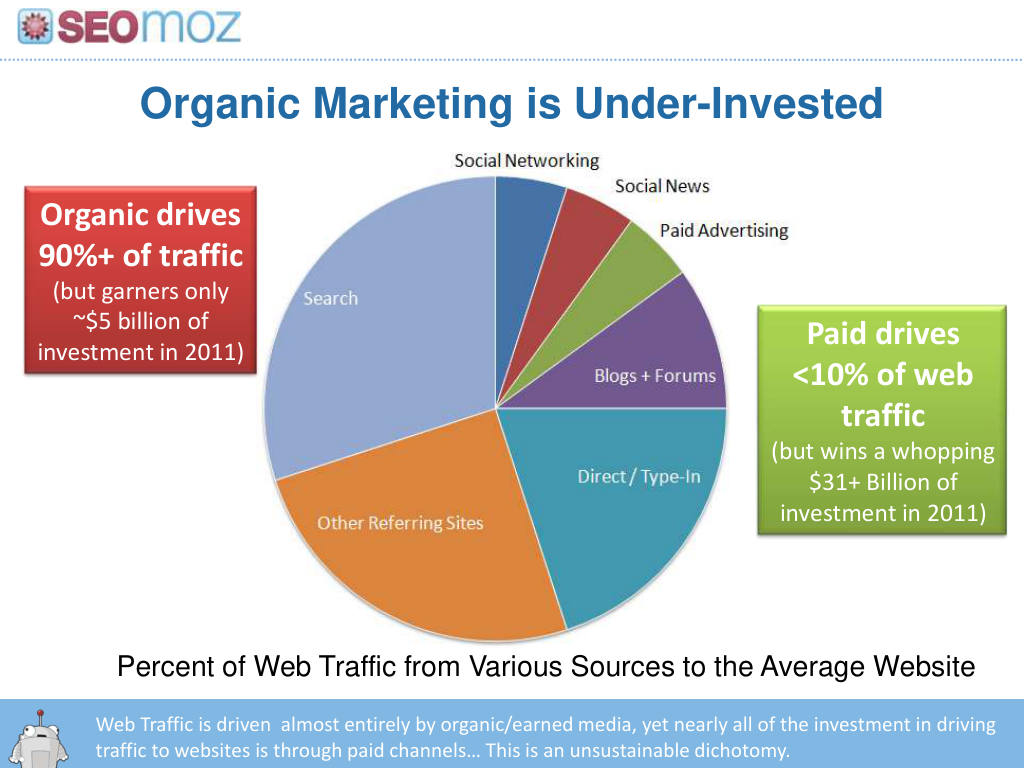
Slide 9 · Organic Marketing Is Under-Invested
Organic sources drive over 90% of web traffic but got about $5 billion of investment in 2011, while paid drives under 10% and got over $31 billion.
How to write this slide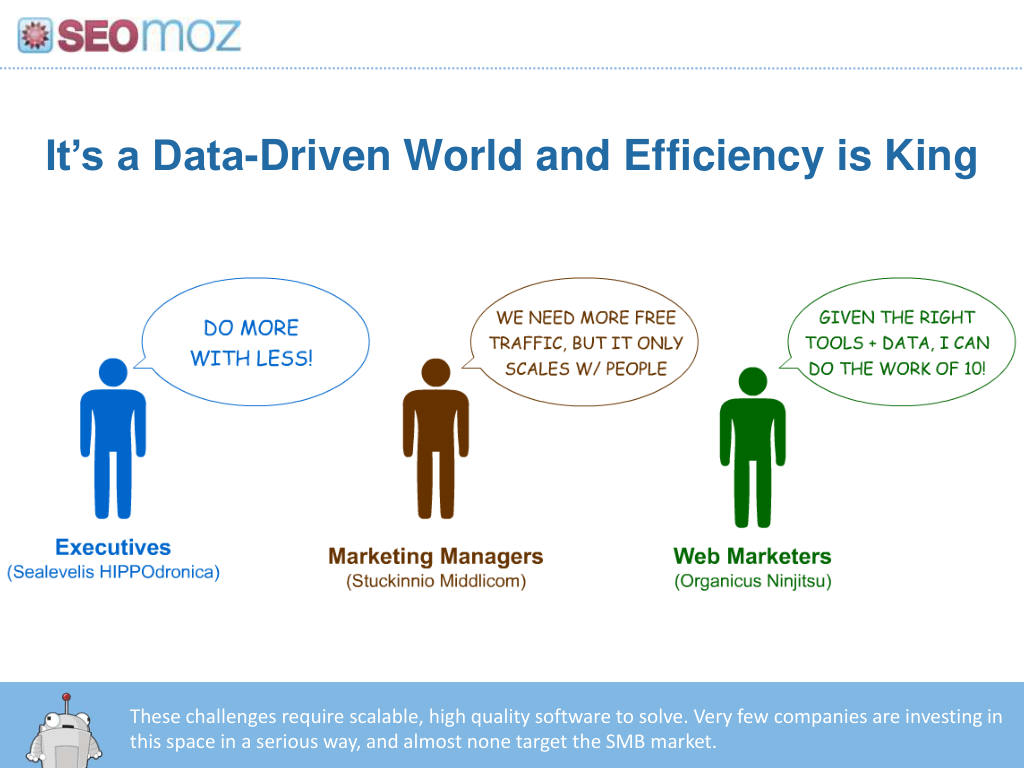
Slide 10 · A data-driven world
These problems need scalable software, few companies invest seriously in the space, and almost none target small businesses.

Slide 12 · Organic Marketing Is Poorly Understood
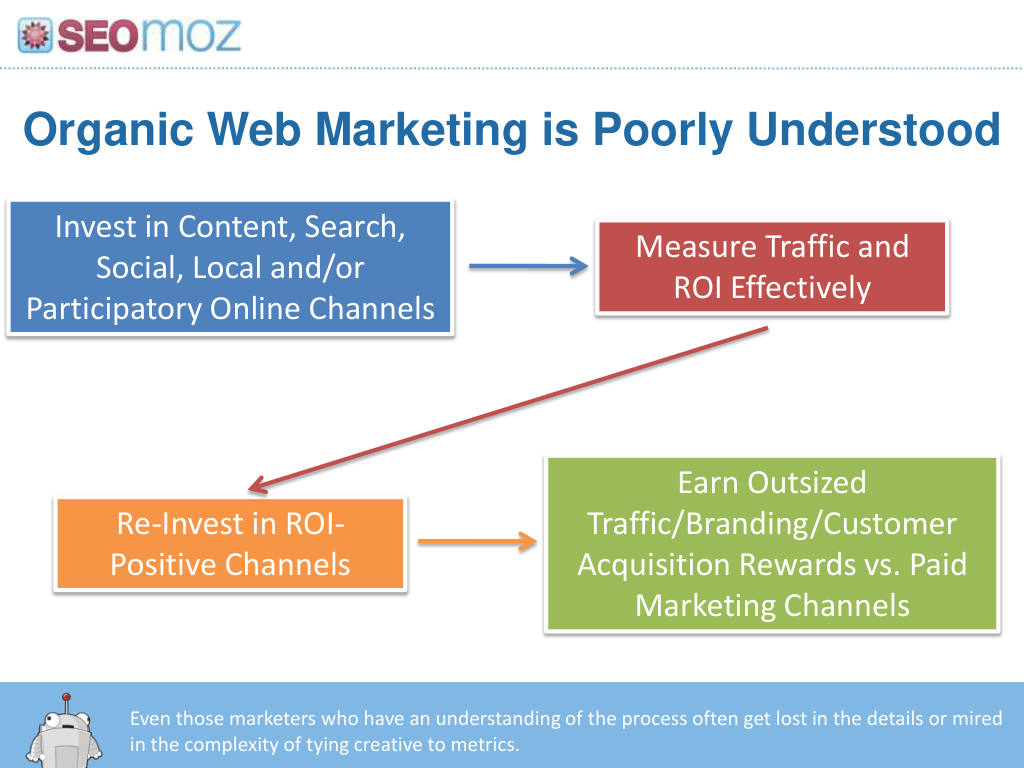
A loop of invest in organic channels, measure traffic and ROI, reinvest in what works and earn outsized returns against paid channels, which most marketers get lost in.
How to write this slide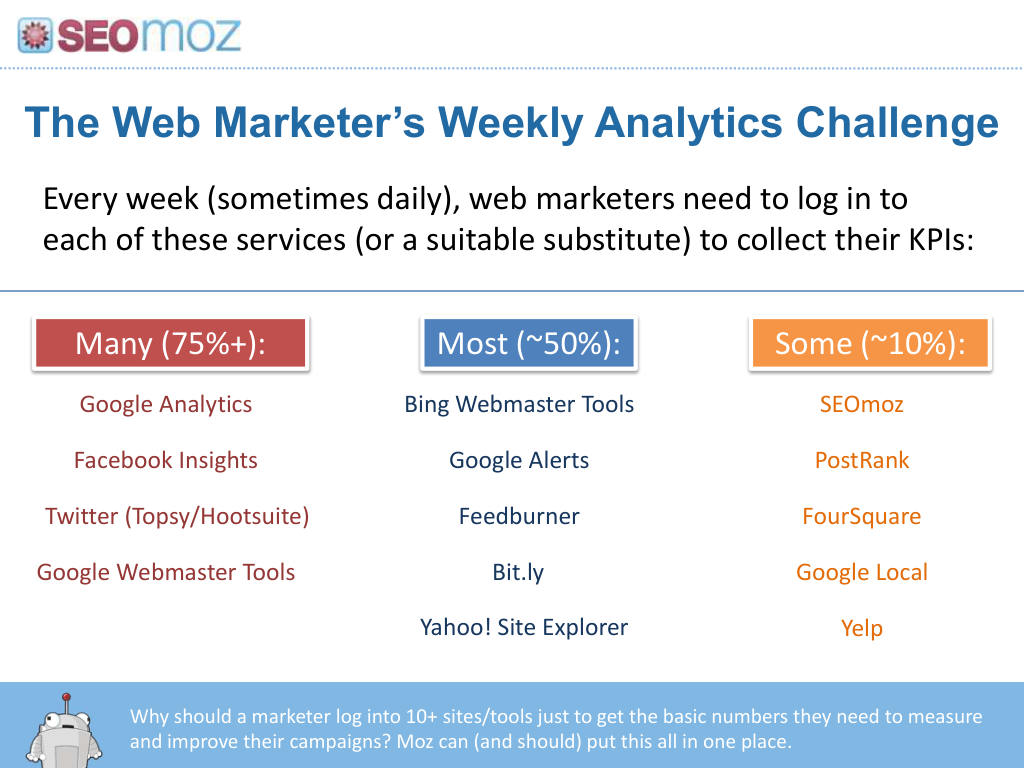
Slide 13 · The Weekly Analytics Challenge
Marketers log into 10 or more tools every week to collect their numbers, from Google Analytics and Facebook Insights to Bit.ly and Yelp, and Moz should put it all in one place.
Slide 14 · Painful Marketing Tasks
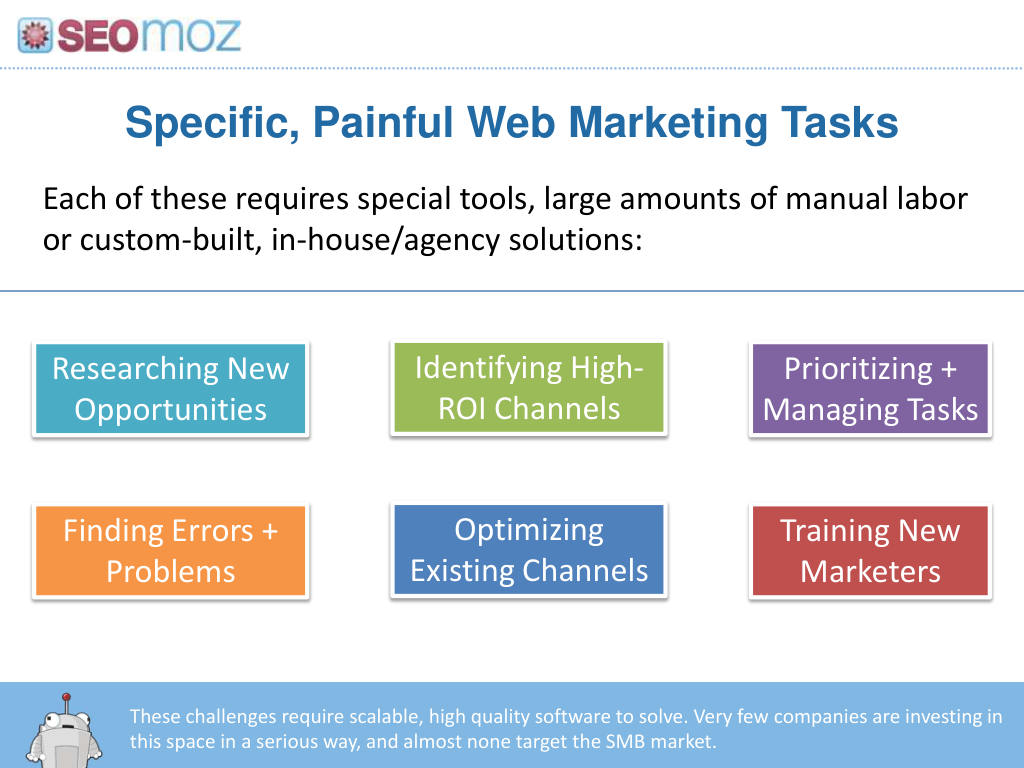
Six jobs that need special tools or lots of manual work, such as finding high-ROI channels, finding errors and training new marketers.
How to write this slide
Slide 16 · Market map
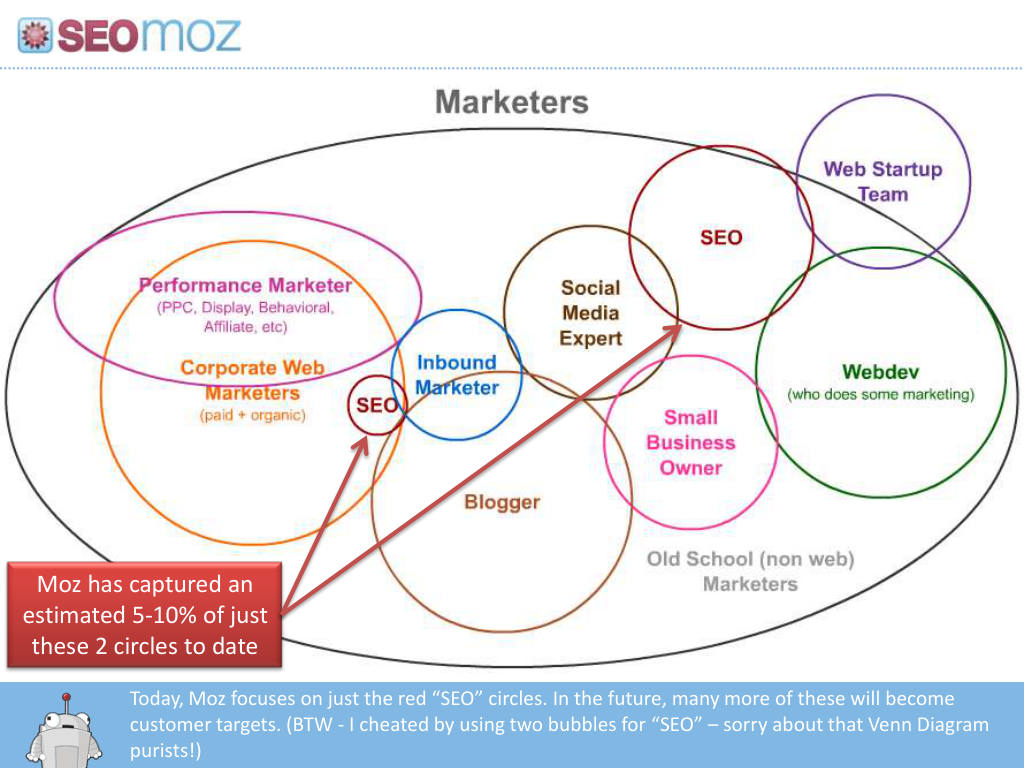
A diagram of marketer types, with Moz focused on the two SEO circles today and an estimated 5% to 10% of them captured so far.
How to write this slide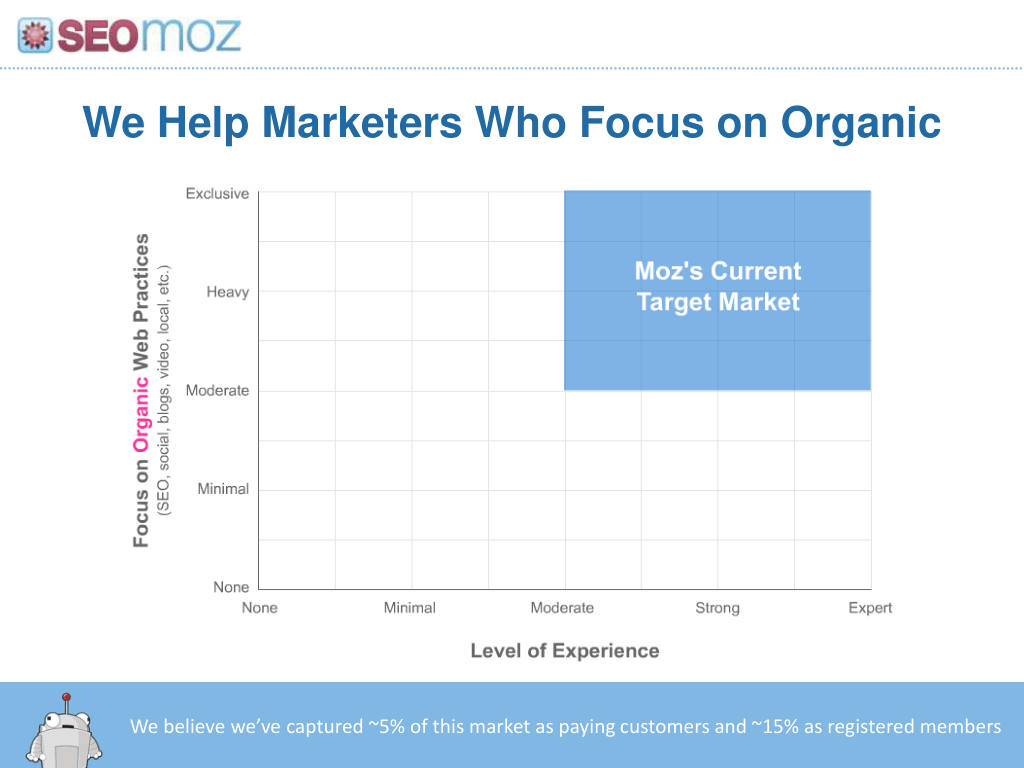
Slide 17 · Marketers focused on organic
Moz believes it has about 5% of this market as paying customers and about 15% as registered members.
How to write this slide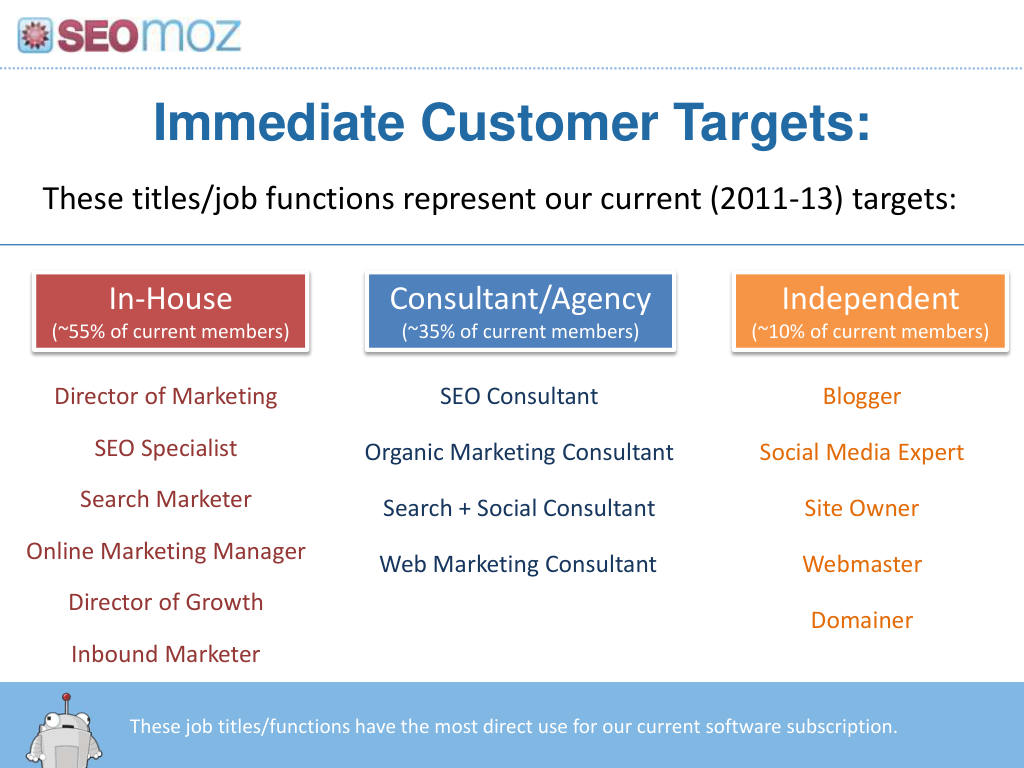
Slide 18 · Immediate Customer Targets
The job titles Moz targets for 2011 to 2013, with current members about 55% in-house, 35% consultants or agencies and 10% independent.

Slide 19 · Where Are We Today?
A section divider.
Slide 20 · Key metrics, part 1
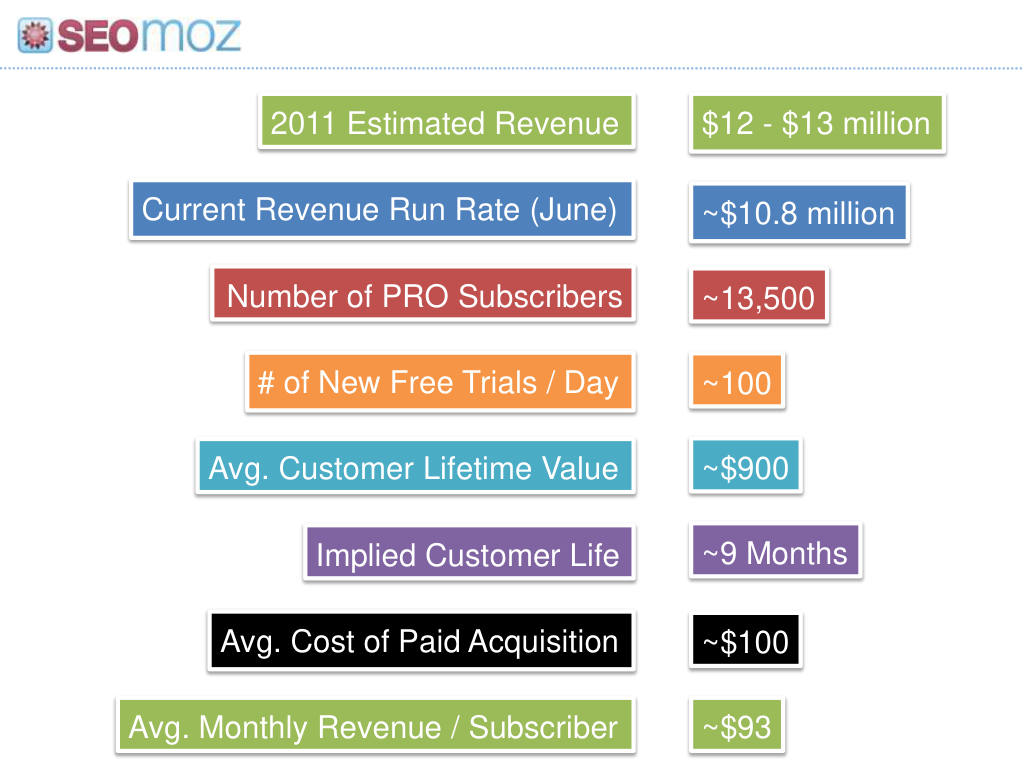
About 13,500 PRO subscribers, 100 new free trials a day, a 9-month average customer life, about $900 lifetime value, $100 paid acquisition cost, and $12M to $13M estimated 2011 revenue.
How to write this slide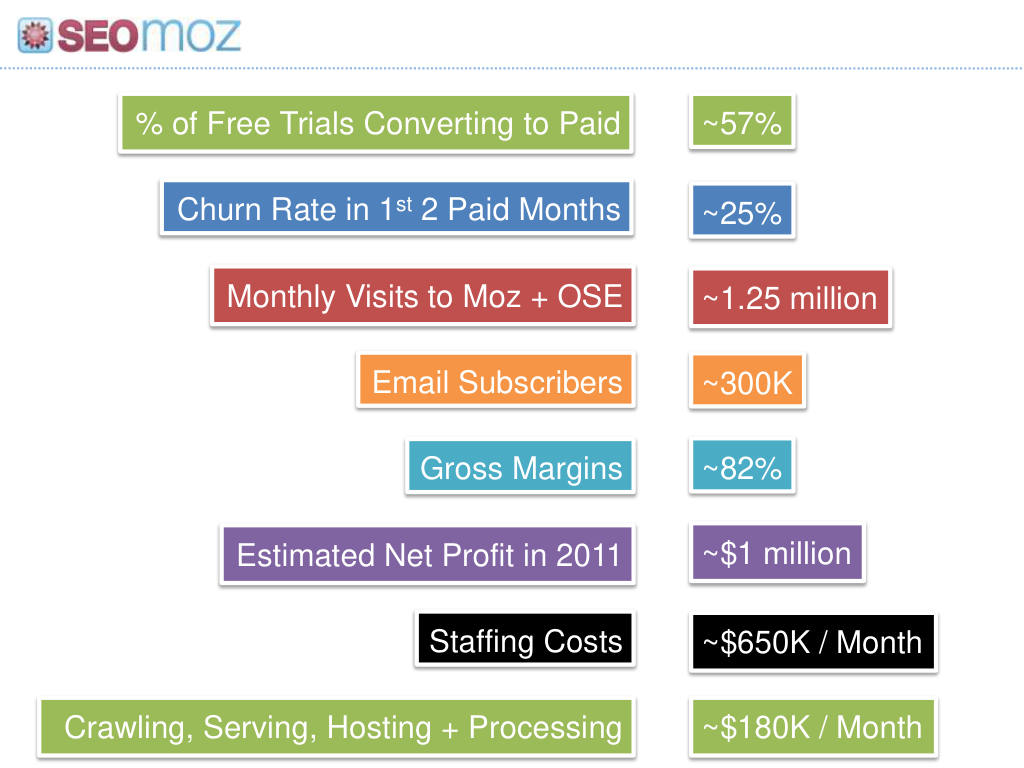
Slide 21 · Key metrics, part 2
About 1.25M monthly visits, 300K email subscribers, about $1M estimated 2011 net profit, 82% gross margins, 57% of free trials converting to paid and 25% churn in the first two paid months.
How to write this slide
Slide 22 · Planned Investment Round
A section divider.
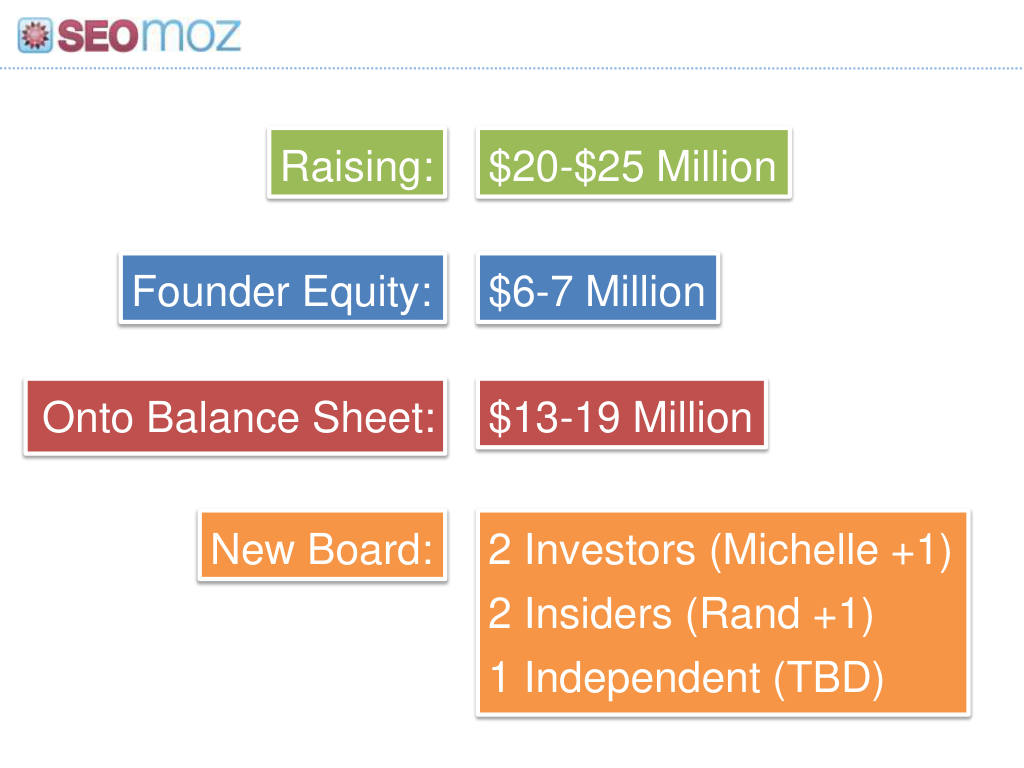
Slide 23 · Round terms
Raising $20M to $25M, with $6M to $7M for founder equity and $13M to $19M onto the balance sheet, and a new five-seat board of two investors, two insiders and one independent.

Slide 24 · Business Risks
A section divider.

Slide 25 · Risk: Google
Google builds much more SEO and social analytics into its own products in the short term.

Slide 26 · Risk: a closed web
The web becomes less open.
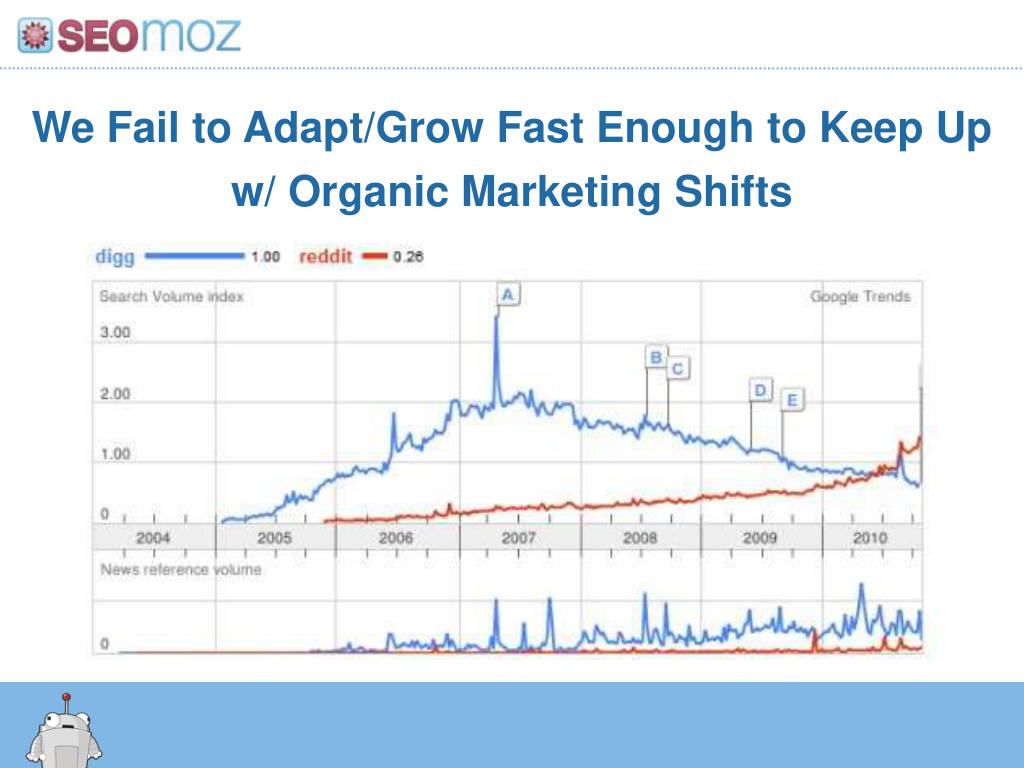
Slide 27 · Risk: falling behind
Moz fails to adapt or grow fast enough to keep up with shifts in organic marketing.

Slide 28 · Risk: reputation
Moz's reputation suffers from missteps in culture, data quality or reliability.
Slide 29 · Use of Funds
A section divider, use of funds and growth opportunities for 2011 to 2012.
How to write this slide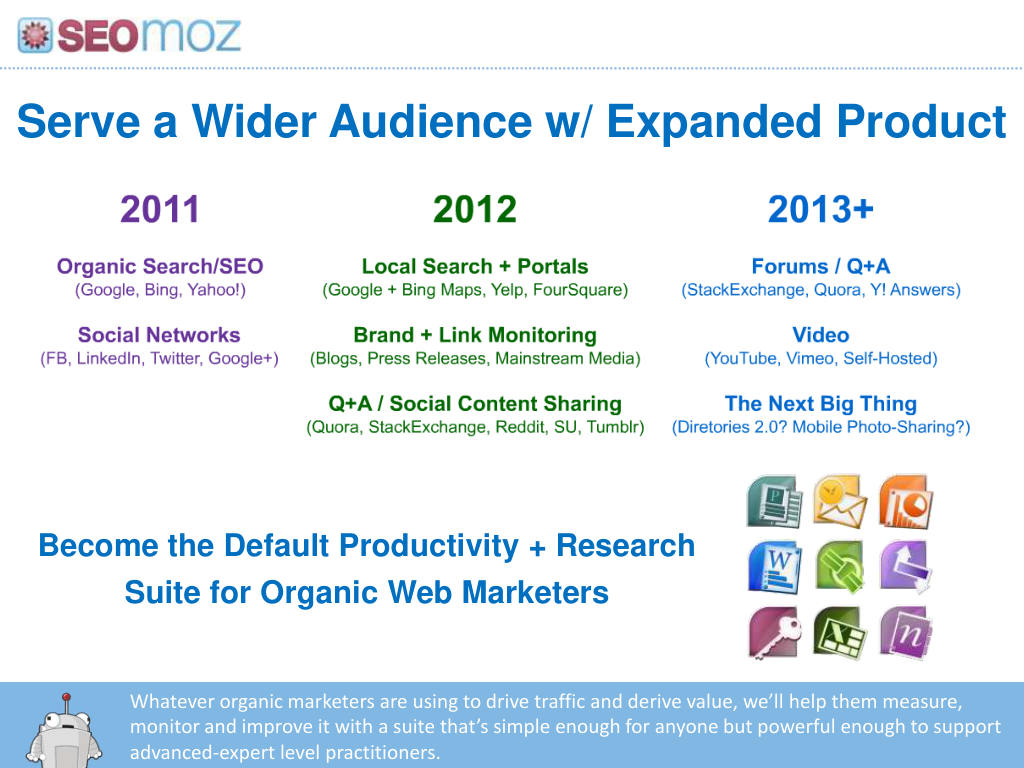
Slide 30 · Wider product
Become the default research and productivity suite for organic web marketers, simple for anyone and strong enough for experts.
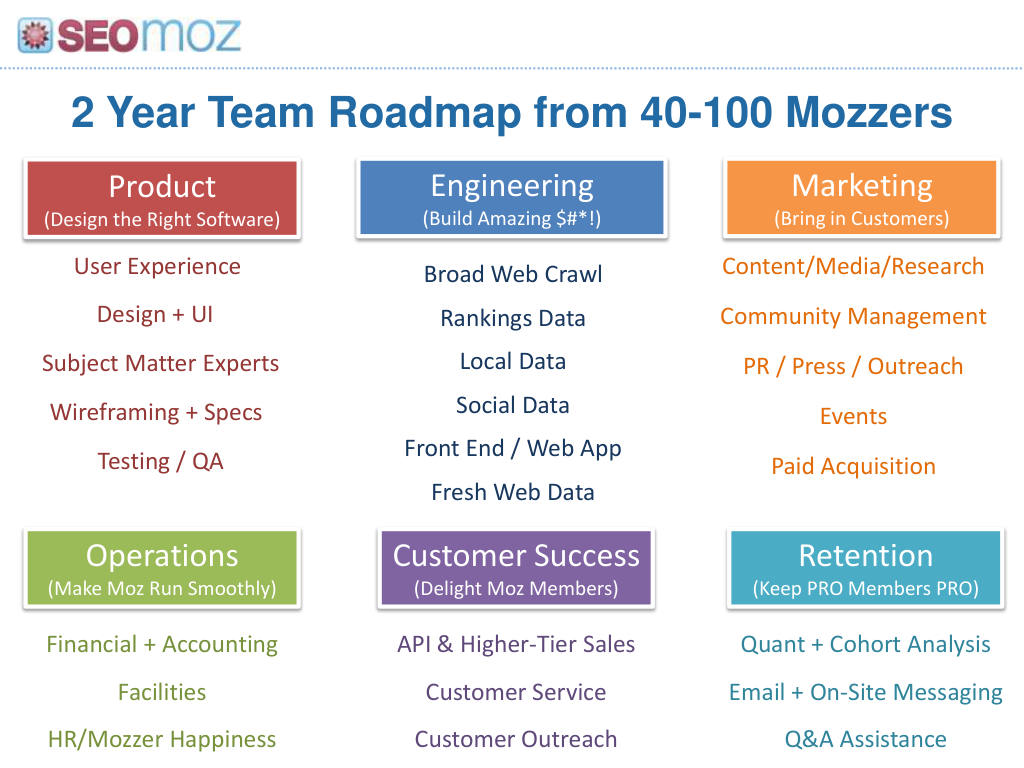
Slide 31 · Team roadmap
A two-year plan to grow from 40 to 100 people across product, engineering, marketing, customer success and operations.
How to write this slide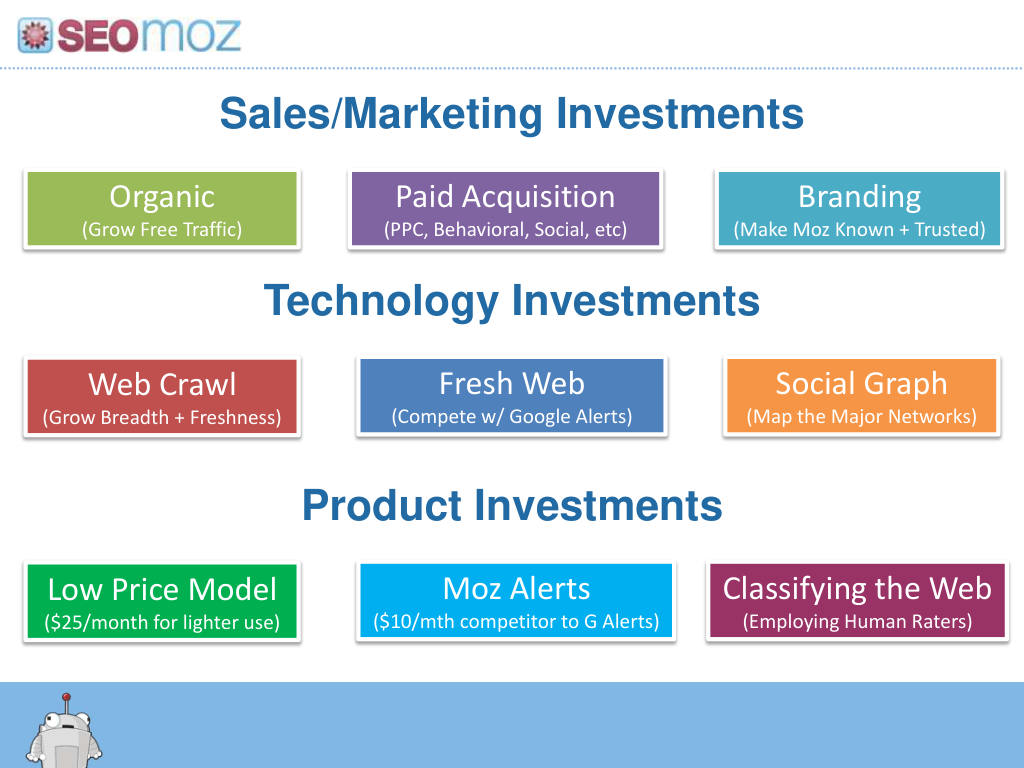
Slide 32 · Investments
Spending on organic and paid acquisition and branding, a bigger and fresher web crawl, social data, and new products like a $25-a-month light plan and a $10-a-month alerts tool.
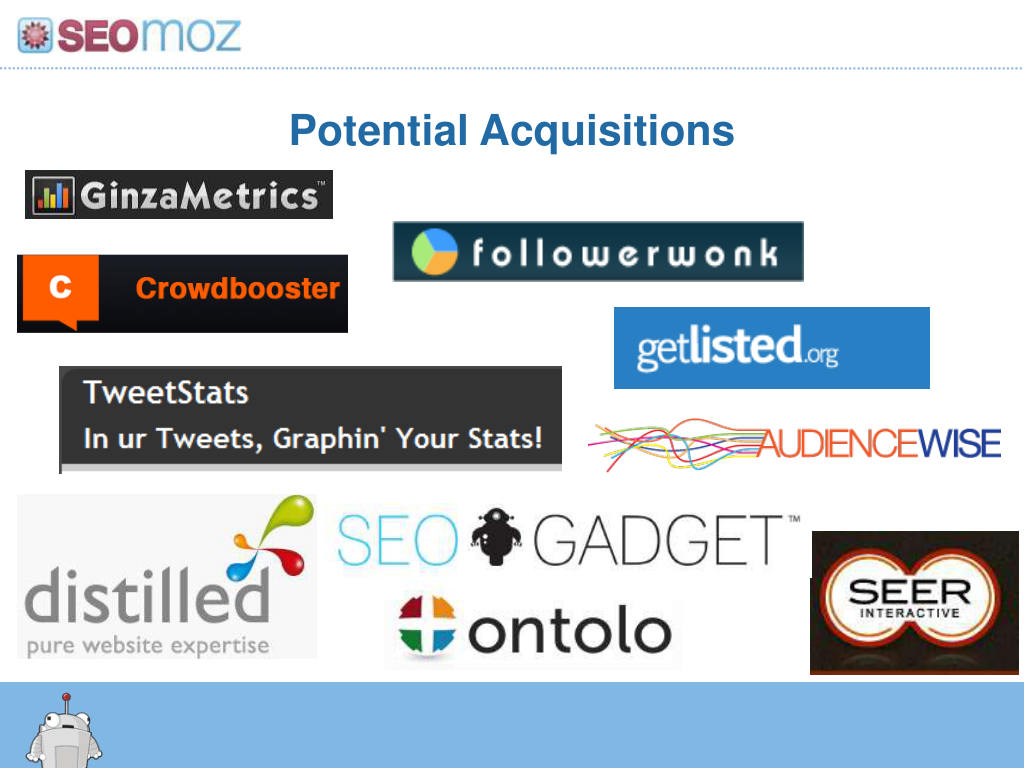
Slide 33 · Potential Acquisitions
Logos of possible targets, including Followerwonk, GetListed, Crowdbooster, GinzaMetrics, Distilled and SEER Interactive.

Slide 34 · Why Moz Wins
A section divider, why Moz is uniquely positioned to win the organic market.
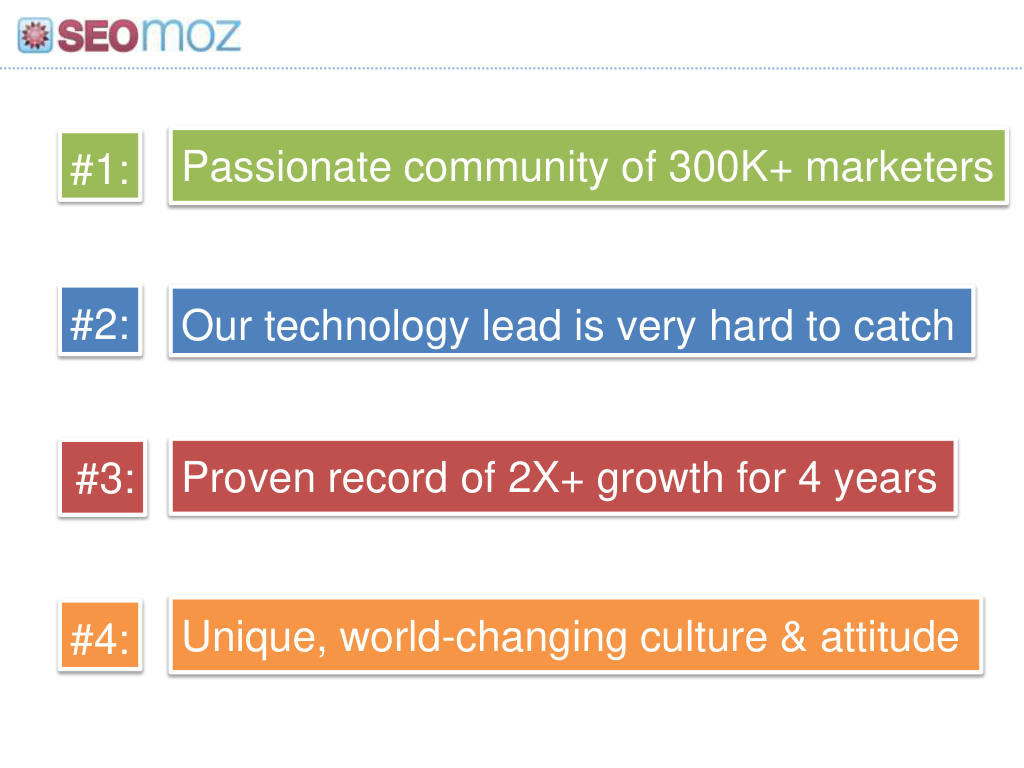
Slide 35 · Four reasons
A community of 300K+ marketers, a technology lead that is hard to catch, 2x or more growth for 4 years, and its culture.

Slide 36 · Close
A rare opportunity to become Seattle's next $1 billion+ company, and an invitation to join.
What the Moz deck does well
- Slides 20 and 21 put every number an investor would ask for on two pages, from trial conversion and churn to lifetime value and acquisition cost.
- Slide 9 makes the market case with one contrast, organic drives over 90% of traffic but gets about $5 billion of spend, while paid gets over $31 billion.
- Slides 25 to 28 name four specific business risks, starting with Google itself, instead of leaving investors to raise them.
What founders can learn from it
- If your company is already profitable, show the full unit economics. Moz's metrics slides do more work than any vision slide.
- If part of the round buys founder shares, say so plainly. Slide 23 splits the $20M to $25M into $6M to $7M for founder equity and the rest for the company.
- A strong deck doesn't guarantee a close. This round fell apart in diligence, and Moz raised from a different lead the next year.
Questions about the Moz pitch deck
- How much did Moz raise with this deck?
- The round this deck pitched, about $24M, fell apart during due diligence in August 2011. Moz, then SEOmoz, raised an $18M Series B from Foundry Group and Ignition Partners in May 2012.
- How many slides are in the Moz pitch deck?
- The July 2011 SEOmoz pitch deck has 36 slides.
- Is the Moz pitch deck real?
- Yes. Rand Fishkin uploaded it to SlideShare himself in August 2011 and wrote about the failed round on his blog.
- Why did the Moz round fall through?
- According to Fishkin, the lead investor pulled out during diligence about two weeks after a signed term sheet, citing softer revenue in June and July 2011. He suspected market timing also played a part.
Get your deck reviewed the same way.
Comments on every slide, the words to change highlighted, and the 3 fixes that matter.
More pitch decks
- AirbnbAirbnb pitch deck2008 · Seed · $600K
- UberUber pitch deck2008 · Seed
- CoinbaseCoinbase pitch deck2012 · Seed · $600K
- NotionNotion pitch deck2013 · Seed